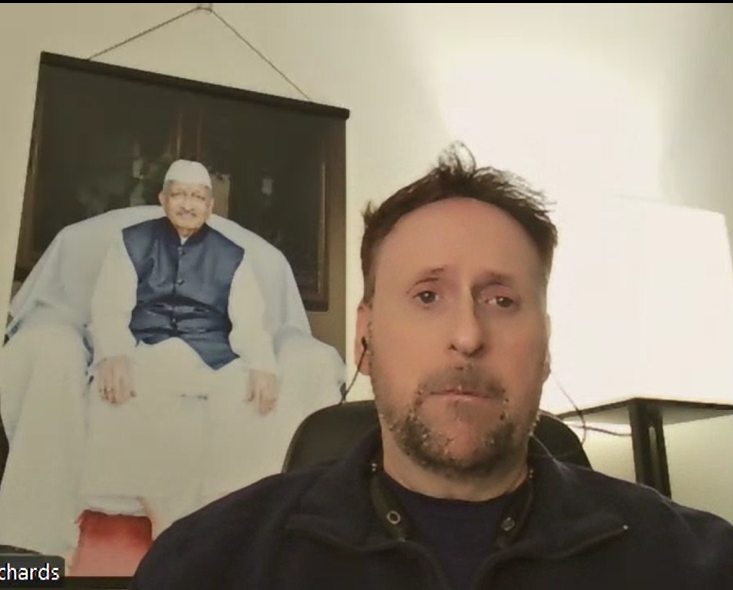
This is the Tuesday Talk held January 27, 2026. Tuesday Talks is a gathering on Zoom of devotees from the Ramakant Maharaj USA visit. This is a gathering of devotee’s to discuss and clarify the teachings of Sri Ramakant Maharaj. These spontaneous utterances are recorded and shared with anyone who may find them useful.
Jai Sadguru!
Tuesday Talk January 27, 2026
Transcribed by TurboScribe.ai. with minimal editing
Q: I received Naam Mantra about three years ago, right. And I've been doing it. But for me personally, I don't know. I guess I do the job of Mantra throughout the day, you know, and I liken it to almost a mindfulness practice in Buddhism, you know, where it's like you, you're using it, it's filtering, it's bringing you to the present moment, you know. So I do that. And then, I try to sit with it in meditation. Um, but I haven't, um, you know, like I, I had, um, about 16 years ago, I had a glimpse of the self, you know, among some other bits of Samadhi. I'm kind of wondering if, um, if I should, um, go back to like, just, just doing breath meditation, because, um, I've read that at some point, you know, with the Naam, it didn't end up stopping it, uh, for some people, and they just be with the breath.
And I know Nisargadatta, he warned against, you know, being too into Samadhi, because it creates an identity for some people, right? But at the same time, he obviously sat long hours, you know, during those three years. And, um, you know, it's, it's not that Samadhi gives you the realization, right?
Like that's not even, it's just, it's not, it's not required at all, but it helps stabilize, right? And so I'm wondering if I should maybe possibly go back to, um, you know, keeping the Naam, but just doing the breath, um, in meditation, because, uh, I feel like, um, I, like I have no, no issue with recognizing that everyone's myself, like this is, I'm the only one that experiences my experience. There's, this all comes from yourself, and this is all, you're formless and all that stuff, right?
Like that's not a problem, but the issue is that I still have issues with my nervous system, having anxiety or fears. And I try to go back to the Naam and I say, you know, just let the Naam do its work. And it helps to some degree, but I've read like, not just in our tradition, but in like say Buddhism that having Samadhi and being able to, um, concentrate and letting those experiences, uh, filter through into your nervous system, that that'll help stabilize you in, in these, um, realizations and stuff.
So, what do you, what do you think? Um, do you think that that's okay for me to just do breathe, uh, with the Naam?
John: If you've been given the Naam, I highly recommend that you continue because eventually you're not actually doing the Mantra. You're just kind of listening to it running through. And when you talk about, uh, like negative, uh, highway, nervous and this sort of thing, um, I can only say from my own self, when I rode on the back of a motorcycle one time with this guy and we were zooming down the highway and I told him, I said, you know, I'm really not liking motorcycles as far as I haven't ridden on them.
And he decided to go and just go crazy. And during that time, I concentrated on the Mantra while I was on the back of the motorcycle. I was just concentrating on the Mantra, and it flowed because I was no longer thinking about the experience that I was experiencing and identifying with a local identification of I'm on the back of this motorcycle and I'm not enjoying it.
And what happens if we crash instead of focusing on Mantra, all the peace came. It was, and it wasn't even just peace. It was just the lack of anxiety, the lack of anything because mind could not sit there and create a thinker thinking thoughts about the situation that it looked like I was experiencing.
Q: Yeah. It was like, uh, I use it a lot. Um, uh, you know, not just like trying to say the job, especially that's a good time all the time. Um, and, and, uh, I mean, that's, you know, it's, uh, there's like another tradition, they call it prayer without season, you know, and it's right, right.
John: Yeah.
Q: What you're doing, you know, correct. Same system.
John: You're inviting attention of the invisible listener consistently and you're clearing away the thought train. You're no longer paying attention to this flow of thoughts because the thoughts are lessening and lessening and lessening. Cause the Mantra is like a broom that just keeps sweeping.
And when you talk about Samadhi, I'm guessing you're talking about your, the sense of presence that's coming. And then there's like a sense of presence. And then there's a sense of a, nothing of you in that sense of presence.
And you're able to just walk about and do your job and just kind of move about without any kind of thought, pressuring you into believing you're a separate body.
Q: Well, whenever, whenever I'm doing stuff, typically like just regular, I'm not, I don't have like, uh, pressured thoughts and I'm not having to plan out the next action. It just happens in the moment. But what I'm talking about with Samadhi is, um, you know, just sitting in meditation, being able to, you know, uh, like whenever I saw the self, it was like, everything was, it was just formlessness and it was self-luminous, I guess you'd say.
And, um, you know, it was very much, there was no identity there. I was not Matthew. I was just, it was like the most natural feeling.
And whenever I started realizing, I started observing it, that's whenever I came out of it. Right. And so I was like, I was, you know, years have gone by, I've spoken with some friends with, you know, other practitioners of different traditions and, you know, it's like, um, like that's, that's what I interpret the glimpse of the self as, but as far as, um, you know, I miss that a lot.
I don't, you know, I know that like, I've read that in our, in our tradition, it's like, it doesn't have to be this mind-blowing experience all the time. That's not what it is. It's not a, you don't have this, uh, it's a very normal thing at that point.
Right. But like in the back of my mind, sometimes I'm thinking, you know, with, with say Nisargadatta, you know, having sat for so long and living in the self, right. You know, there's, there's some, there's some problems with terminology, because if you haven't, if you're not like we say, well, you're already Parabrahma. Right. But if you don't understand that, then it doesn't register. Right.
Only a Jani knows what a Jani experiences. And so, um, if in the back of my mind, I've thought, well, that experience of the self that I had, is that what Nisargadatta and Ramakant have always been in once they realized, you know, if they just existed in that identity-less, uh, formlessness, um, you know, experience, but they would say, well, if it's an experience and you can reflect on it, that's not what it is. Right.
John: So, there's no experience, but that just I, just I, feeling that's the, I am that Nisargadatta Maharaj talks about where you remain with that. Just, I just, I'm speaking about it as presence. These are just words, but it's like just that very, very, very subtle, subtle, subtle sense of presence.
Slowly identification goes away from body and onto the sense of presence as, oh, I am more like this sense of presence than I am this body. This is not a thought. This is just an intuitive understanding, the knowledge, so to speak.
This, after some time of knowing, oh, I'm formless presence, you absolutely understand that whether presence is there or not, I am. And that is your own selfless self, ultimate reality. Presence is an appearance because of body form.
You can feel it, but you are more subtle. I am, I understand, oh, I exist. Just I, just I.
There's nothing there, but still, there's that subtle, subtle experience, for lack of a better word, of just I. You are the one to whom this has appeared. Now this is that black hole that you are just, there's nothing, there's no, you can't think of questions, you can't think to try and talk your way out of believing that you are that you're just here.
That's conviction, oh. Now, moving about your day, you just do your job, do your duties, you don't really pay too much attention to what is happening or not happening. Flow of thoughts has almost totally, completely gone, other than I'm hungry, you have some body-based need, and you go and do this.
You're not a robot or an automaton, you can still fully function in the world, but there's no longer an idea of a timeline of an object in space and time, creating a, quote, life. It's just scenes appearing and disappearing, appearing and disappearing, and then all the words and all these things, you can just throw those out. Jani, or Yanni, and Buddhist, and Hindu, and Nirvana, and Samadhi, and all these there, because they're all body-related, and you are prior to body.
Also, you're not involved in the thoughts or any kind of, like, mental picturing of anything, because you absolutely know that the mind can only show you images, projections of things that came along with the body, because mind came along with the body. Mind cannot be with you, nor can you suddenly say, I'm experiencing myself, because you're creating a duality where there is none.
Q: Yeah, I understand that. I just, like, I've noticed that whenever I try to sit, I just feel agitated, and I've tried to, you know, I've tried to cut the caffeine, and different things, and so that's why I was asking if you think that.
John: I don't think breath is a good idea. It's back to egoistic meditation. You're going to be paying attention to breathing as a body form, whereas see, the Mantra is erasing all the concepts slowly, silently, and permanently.
Maharaj talks about it as a broom, so that no sticky concepts can stick, and eventually, if there's no place for these sticky concepts to stick, you lose interest. You're no longer creating worlds of difficulty because of belief and concepts of; I am a body in a world experiencing this experience.
Q: Yeah, I've kind of just thought about sometimes just, like, stopping it all together, just because it's like, there's no, like, if you, I feel like if you've seen, you know, it's there, but it's like, having this, this, if the conviction
John: Is strong, if right now, tomorrow, they were to say, God forbid, the doctor says, Matthew, you only have a couple of months to live, would there be the experiences and the thoughts of dying?
That's what Nisargadatta Maharaj talks about this, or Sri Ramakant Maharaj talks about on your deathbed, are you going to be shivering and shaking, or do you absolutely know, with conviction, I was never born, I can't die. Like the famous words of Sri Ramana Maharshi, when they told him he was dying, and he didn't understand, he's like, well, where would I go? Like, yeah, that's the deep conviction.
Q: I kind of fluctuate, honestly, I mean, because I got surgery coming up next week. And it's like, you know, this is a very real thing for me. And I think, well, I think I just get reborn into this again, there's not a change, there's not anything that I could be different.
There's just whatever is, is, is, and there's no, it's just, you know, just formlessness spread out. And it's just a dream, just like a real dream, you know, so there's not like, there's not a problem. But for me, you know, having been raised in America, and having this Christian upbringing, whenever I was younger, you know, sometimes that little health here creeps in.
And I think, you know, I think this is a deeply seated nervous system issue, you know, where, you know, for me, it's like, like, I don't know, it's just been weird. So it's like, that's why I was wondering about the Samadhi is like, you know, should I try to try to do that more to kind of get the nervous system to just accept the conviction? Because, I mean, you know, I don't believe that we have an intellectual tradition, I think it's very much a direct experience.
You've seen it, you've done it, you this is it for you, there's no question.
John: But Mantra should be removing doubts, because no doubts can be created. The story of the mother, and the children, the children are very active and mother can't cook. So, she gives them some toys to play with.
And now she can concentrate on cooking. Same with the mind, you're allowing this Mantra to run through the mind, cleaning it, clearing it, so that these thoughts don't come. And as far as surgery, when I went in from my pacemaker, I did the exact same thing, I concentrated on the Mantra, listening to the Mantra naturally running, and went through the entire experience.
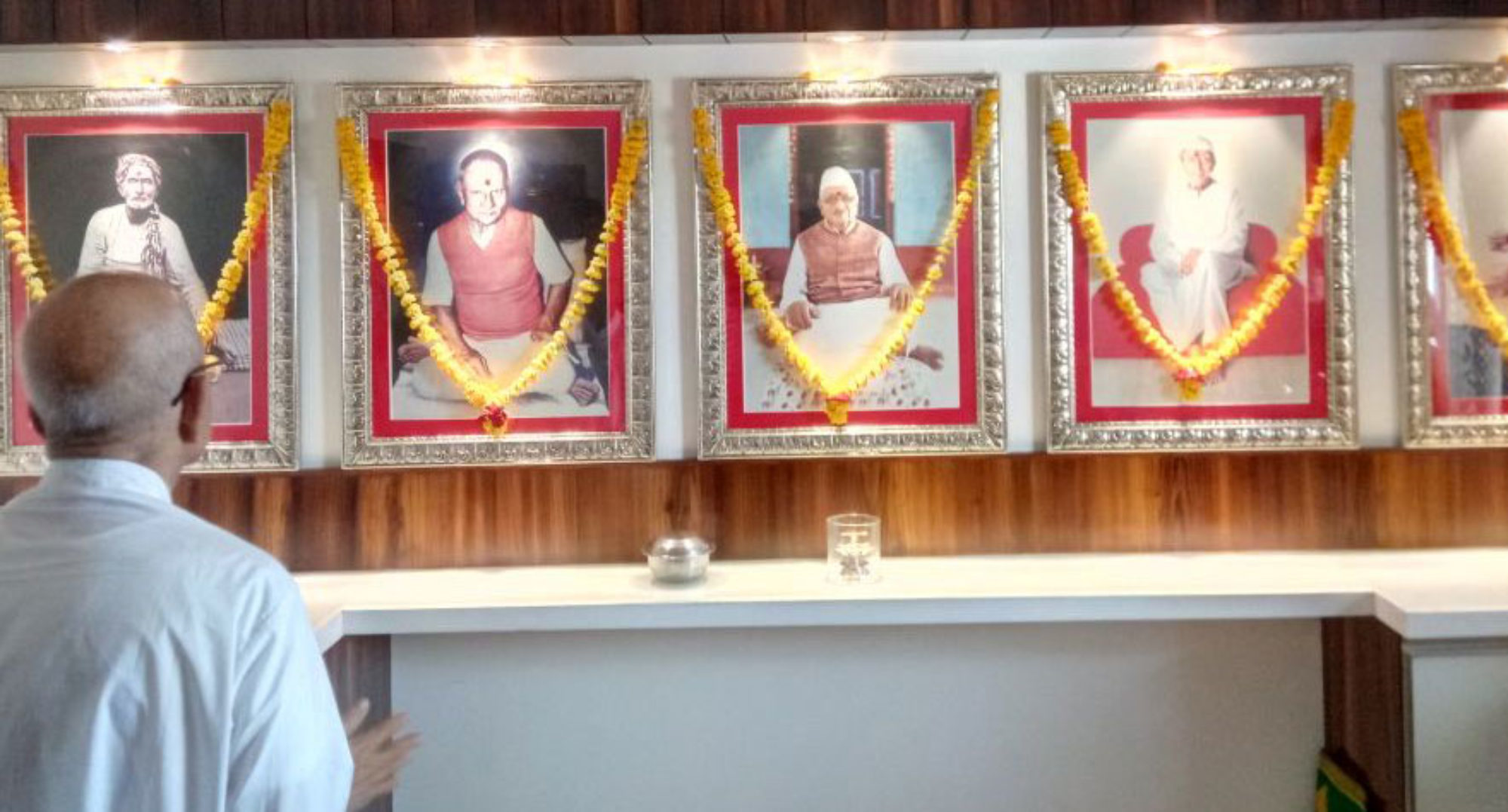
Also, I'm assuming you have pictures of the various masters that you bow down to. And you're basically, even though it's a concept in duality, it's a devotion after liberation. So where you're like, oh, master, thank you.
Thank you, master.
Q: You know, I may be missing reading books every day, you know, Nisargadatta, Ramakant, Siddharameshwar Maharaj, I have Dasbodh. I'm I spoke with a gentleman, he has a whole bookstore, or like the Marathi stuff. And I was going to try to learn Marathi and just translate the books that you know, we don't have in English, you know, and just something devotional thing, right.
So, but, but, you know, I don't, I don't have their pictures hanging up. And I don't bow to them every day. But for me, the I've had, I'm just kind of weird about like, that aspect of spirituality, to some degree.
John: I mean, the main thing is that you surrender the idea that you're separate. That's, that's the, when I went to go see Sri Ramakant Maharaj, I very much understood that that was my concept of God that had manifested in this form. And I was able to bow to the feet and thank that presence that I understood was in the form of Maharaj for this whole thing and coming here and being relieved of so much pain and suffering.
That was a very well-known thing and bowing to the masters. I know even Sri Ramakant Maharaj, he says a lot of the foreigners would come into the ashram and not bow to any of the masters.
But you're not body and that's not body.
Q: Oh, even I had a bad experience before with the teacher.
John: So that's, and see teacher, that's, this is not, teacher is not the body. And I understand there are teachers out there who just teach and then they ask you to do things or they give you all sorts of promises or you must pay lots of money or anything like this. But the reality is yourself is projecting the entire world, including the images or the pictures of the master that you are internally.
And you're not bowing to Sri Ramakant Maharaj, you're bowing to Selfless Self, which is your own self. So, it's not like, it's not like, oh, I'm bowing to this guy's feet. No, this is absolutely, it's just Selfless Self-devotion.
And that also brings about that Selfless Self-intoxication. The more you really remain with the sense of presence, this I am, you can remain with nothing else. Nothing in this illusory world has any kind of pull for you, because it's just this, just this beautiful, just I, just I.
Q: You were your own master, correct? You were your own master, right?
John: Yes, yes. You are master. There is no such thing as master and disciple.
Q: Exactly. So, he doesn't have to have that perception if he doesn't want to.
Q: I mean, the thing is, is that it's like, this is all a projection of the self in my, the way that I understand it. And so, it's like, there's, I don't know, maybe the first teacher, I had false ideas about a teacher and that manifested as false ideas, whatever. I don't know them, you know, it's Maya, who knows, right?
So, but the, that devotional aspect is something that I have neglected, I feel like, you know, so.
John: That's a large part. That's, that's why even the bhajans, still to this day, I wake up in the morning, I put the bhajans on, I listen to the bhajans to give that spiritual atmosphere, and then read books from Nisargadatta, Sri Ramakant Maharaj, a couple of different like daily readings and things. And that's just become a way to start the day in that devotional aspect.
But devotion is important. It's, it is because this desire to know yourself is to remove anything that is not. It's a burning desire within.
I don't know if you've read on the website, the Ramakant Maharaj Dakshina, but I outlined that when going to India at the airport, in those words that I said, I was like, I am going to India to bow at the feet of the master and ask that anything that is not that be removed. And that's that devotion that that selfless self-devotion, because whatever bad experience you had led you to Maharaj led you to be able to take Mantra. So it was just one step on the journey.
This is the final destination, your own selfless self. And even to have like preferences of I don't like this, I don't like the bhajans, I don't like that. There’s still something there, creating this situation of I don't want to do this, or I don't like that, or I don't want this.
And the more that that Mantra slowly silently erases, there's no place for these sticky concepts to stick. Like you said about Christian, okay, as a kid, I was I was raised up in Christian. Now with this, as I'm sure you have been able to see, and you already mentioned it is the same, like everything that that that Jesus was saying is what we're saying.
This is the absolute truth. And when you say after I die, I'm not sure about the heavenly experience or this experience or that experience. But you're not going to there's no birth, no death.
Q: Yeah, it's just something that is.
John: And this is why it's important. Remain with the Mantra. Slowly, silently, permanently, there won't be no concepts that can stick, because there won't be anything for them to stick to no place to hang that.
The last thing you want to do is like veer off and say, oh, maybe this is not it. Let me go over here. Because you understand that's just game of the mind.
Q: 100% 100%.
John: And if you fall into the trap of the mind saying, oh, let's try this master or this over here, or, you know, this is not working for me. Let me do Christianity. Let me do this.
Let me see more of this, or it's just more busyness, because the reality is, all of these are body knowledge. All body knowledge can be discarded, even all the body knowledge. It is because you're not a body, the body knowledge, body relations, body experiences, none of those are you.
Q: Yeah, I feel like I'm just like, right on the edge.
John: And the slight push Mantra. And like I said, devotion, at least for my own self. This devotion was extremely important in my whole kind of evolution, if you want to call it that.
Because without it, there would be an egoistic spirituality, like Maharaj talks about of I'm in the river with my leg up for five hours because of this thing, or I walked around Arunachala, or I lived in cave for like, you know, two months in the cave by myself, because Ramana Maharshi did a similar thing. This is all the egoistic, we're talking practical spirituality, where when you know yourself in a real sense, okay, now you just do your job, do your duties, because that conviction is deep. And if for some reason you go through, like you said, surgery, body-based experience, perfect time to be with Mantra.
As in my own case with the food poisoning in India, rather than flipping out about barfing and really being violently sick in a foreign country with nobody that I knew around me to like, quote, help me and relying completely on Mantra and Maharaj and going to a foreign hospital, but not experiencing any of that. And going for pacemaker, again, remain with Mantra, going through the whole experience without experiencing this. So you could say, oh, if there's a sudden kind of flash of this is happening, Mantra, because right now I've already created a local identification of something happening to me.
So why not then use that to experience the Mantra?
Okay. And as I mentioned, even the motorcycle ride, because at first that was no matter how Selfless Self you are, you get on the back of the motorcycle, this dude's doing like 100 miles an hour. And you're like, Oh my god, man.
So, Mantra, Mantra, Mantra. And then, oh, here we are at our destination. And I wasn't even like, like shaking.
So, it wasn't even a physical manifestation of fear, because that had left.
Q: Well, thank you for clarifying. I appreciate it.
John: Jai Guru.
Q: It's sort of like devotion is what keeps us here. And it is what we're doing. It is. It's here. Devotion is, it's sort of why I'm here.
John: Devotion just comes from internal, like, even at the ashram. It's funny, because when I went to India, first off, it was, okay, I don't like fruits and vegetables. Well, guess what?
You're going to be eating a lot of vegetables. But I said, internally, I didn't ask Maharaj, but I said internally, Master, please let me look at these vegetables and not register that they're vegetables and just eat and not have something in their blocking, not put a me in the road. Let me just do this, please.
And Mantra, Mantra through lunch. Okay, you're eating vegetables. You would not have done this before.
Waking up really early, because Kakad Arati is like, I don't even know, I think it's like 5am or something. We wake up. And I'm up a little bit before that, because I wake up, take a shower, sometimes hot, sometimes cold, go to the ashram, and begin that he's, the people are sweeping and preparing for the bhajan and putting the flowers and all this sort of thing.
And there's just that natural devotion of just surrendering. And at least in my experience, the surrender was very important, because like I said, the whole thing that brought me into this was a 12 step program, where I was completely out of control, egomaniac off the charts, and then smashed and had to rely on something or someone else to help me, which then led to my understanding of a greater than myself, as this presence, worshipping this presence, thanking this presence, doing the prayers to this presence, which eventually then led to Sri Ramakant Maharaj. And all of that was because it needed to be surrendered, it shouldn't be. I think Nisargadatta, well, Sri Ramakant Maharaj talks about born in Russia, or India, or America, or Britain, and all the different body-based concepts that might have come along with that, but you are not body.
There's no India sky, America sky, Russia sky, they're never at war with each other or complaining or saying you're too far over into my part of the sky. It's not like this. All body-based concepts have to be just; nothing can be held onto.
Because if you hold onto something, then how in the world can you know yourself, unless you create egoistic spirituality of, I'm a very spiritual person, knowing myself. Sri Ramakant Maharaj talks about that trap where it's like, oh, I'm now a spiritual man, and I know that everything I've done, I didn't actually do. But there's the idea that nothing was actually done, and there is no spiritual man.
There's an understanding that's come that before this body, I am. After this body, I am. Or as even Jesus said, before Abraham was, I am.
There never was a time where you were not. There can't be. Because you're all there is, manifesting through the various different forms, in various different ways, just as electricity can charge your phone, you can watch TV, you can have a light, you can have heat, and electricity has no idea what it's doing, it's just supplying the power.
Or in a dream, in a dream, it's a formlessness. You lay down asleep, it's obviously formless, because you're sleeping, and yet the entire dream world is projected, populated, conversations happen, it looks very, very real at the time you're experiencing whatever you're experiencing, and then you wake up. And waking up here is just to know yourself in a real sense.
I am not body, I was not body, I'm not going to remain the body. Invisible, anonymous, unidentified identity, that you are.
Q: Yeah, that's one thing that I've kind of wanted to have more of with Samadhi, is that it's like, when you suspend, you know, you do Pratyahara, and you have sense withdrawal, right? You take away the senses, you exist by your own, there's no need for outside stimulation for you to actually be, you know, you just are. And so that's why I felt like, am I missing that to some degree, to like to stabilize that awareness of, you know, that I exist on my own, you know, without the support of anything, right?
Like closing your eyes, the whole world goes away, you open them back up, it's there. That, it's just, it's not a, how do I put it? It's as simple as that in illustration.
I know we use the dreams and, you know, the dream world and the deep dreamless and that, but it's like, you know, you're the first and you're the last, it's at all, everything that you have comes from you and ends with you. And so knowing that, you know, you don't cut off your hand, and you say, oh, no, I've been cut off. It's like, you know, that you're not the body, you know, that you're not the mind, you know, that you're not the senses or anything else like that.
And so that's why I was like, you know, not having had Samadhi and so long, it's like, you know, that I was thinking that may help stabilize that understanding, you know, so that's.
John: When you sit for Mantra meditation, the sense of presence, that's not like, I mean, now that you know that it's there, you can dive into it pretty much any time, right?
Q: I don't feel like that is, I don't know what's blocking that then only the concept that I'm not because that presence maybe is the meds I'm on.
I don't know. Like I’m, I take psych meds too. So, I don't know if that's had a dampening effect or something, but again, that's a body-based thing.
John: So the only thing that's going to cover your own self or concepts, body-based concepts, because again, fire is burning ash ashes, remove fires, burning bread, same thing with that sense of presence, that sense of presence, that just die, just die. Even first thing in the morning, when you first wake up, you can feel that just I, just I. And anytime, I mean, in this moment, drop back in awareness, just falls into the sense of presence and you could call it Samadhi, but it's not, it's just a, it's just your own self.
It's the most natural state.
Q: Yeah. There's something that I'm just not catching, I guess. I don't know what it is.
John: You know, this concept of I'm not catching it. Remember you are the self, the self, whether you believe yourself to be that or not. So the concept that I'm not catching this, or I'm not progressing or any of this, these are body-based concepts and can be easily removed.
It's absolutely not true. You just sit. Presence is all there is.
That's, that's the, and that's the closest you can quote experience your own self because you are yourself and presence is sort of the first layer, the first concept of duality. I exist, I am, just die, just die. Before the concept of I am something, presence is Selfless Self-intoxication.
Q: That's, that's the, Is that the same as Samadhi? Selfless Self-intoxication?
Q: Samadhi just means concentration. That's all that means. Samadhi is absorption or concentration.
It's not like, it's like whenever you, your mind is absorbed in a meditation object. So, the idea is like, you know, saying the Mantra over and over and over, right? Like at some point you understand the, which you can look it up, right?
But like you understand experientially what the Mantra is. That's the idea with, if you were to have Samadhi on the Mantra.
Q: But it's sort of like stabilization of attention.
Q: Yeah. Yeah. Pretty much.
Yeah. That's, that's, that's, that's a close way of saying it. Yeah.
As far as I'm aware, like, so I don't know.
John: Again, if you have Samadhi, you have an experiencer of Samadhi. Right. That experiencer is not ultimate reality.
Right. So, and then they call them Nirvakalpa Samadhi is the reality of, of just, you're just, you have no awareness of your own self as anything separate.
Q: That's, yeah, that's, and that's what I'm saying is I think the not having Nirvakalpa in like a long time, I feel like I have all this like body-based like stuff that I'm just like, I don't know. I'm going to keep doing the Mantra for sure.
John: Yeah. And all the time, not just in specific periods and forget about meditation because Mantra all the time. Yeah.
Just you're in traffic, Mantra. You're walking to the store, Mantra. You happen to be doing whatever, watching TV, Mantra, whatever it is, because what you just said about not knowing yourself as anything separate, this Mantra will do that because you'll suddenly, again, in my own experiences, you understand from the other side, Oh, I just went to the hospital.
I did this. I did that. I did it, but I did not experience it.
I did not create an experiencer experiencing because mind was concentrated on Mantra. So, it could not create a local identification of an experiencer on which the concepts of fear or the concepts of, Oh, what's going to happen to me or body protection, none of these things could happen because Mantra just didn't allow any hats to be hung.
Q: Would you say that's like an sort of intense focus on the Mantra? Just throughout the day.
Q: I mean, mechanically is what I've been instructed.
John: Well, not mechanically though, because it's like, breathe in first part and breathe out the second part. And that's that, that, okay. Just slowly, silently, permanently, all the concepts are removed without you having to say, I'm removing them or without you having to concentrate.
Oh, my mind's so busy. That's fine. Mantra.
And you watch yourself. I mean, I know this because in India, I got the Mantra, started doing the Mantra and wound up wandering all over India, totally, completely lost and had to take one of the little rickshaws back to the Ashram because you are so totally absorbed that you do not think about the you, what you are, where you are, what you're doing.
Transcribed by TurboScribe.ai.